President Donald Trump has introduced a new economic stimulus plan to provide $2,000 payments to eligible Americans. The program, named the “Tariff Dividend,” will be financed through revenue collected from higher tariffs on imports. The initiative aims to share the economic value generated from international trade with American families while reducing national debt and supporting domestic manufacturing growth.
This proposal reflects President Trump’s continuing focus on strengthening American industry and protecting household financial stability. However, questions remain about its legal approval, income limits, and payment schedule, as the Supreme Court and Congress weigh in on the plan’s feasibility and funding mechanisms.

Trump’s $2,000 Stimulus Plan
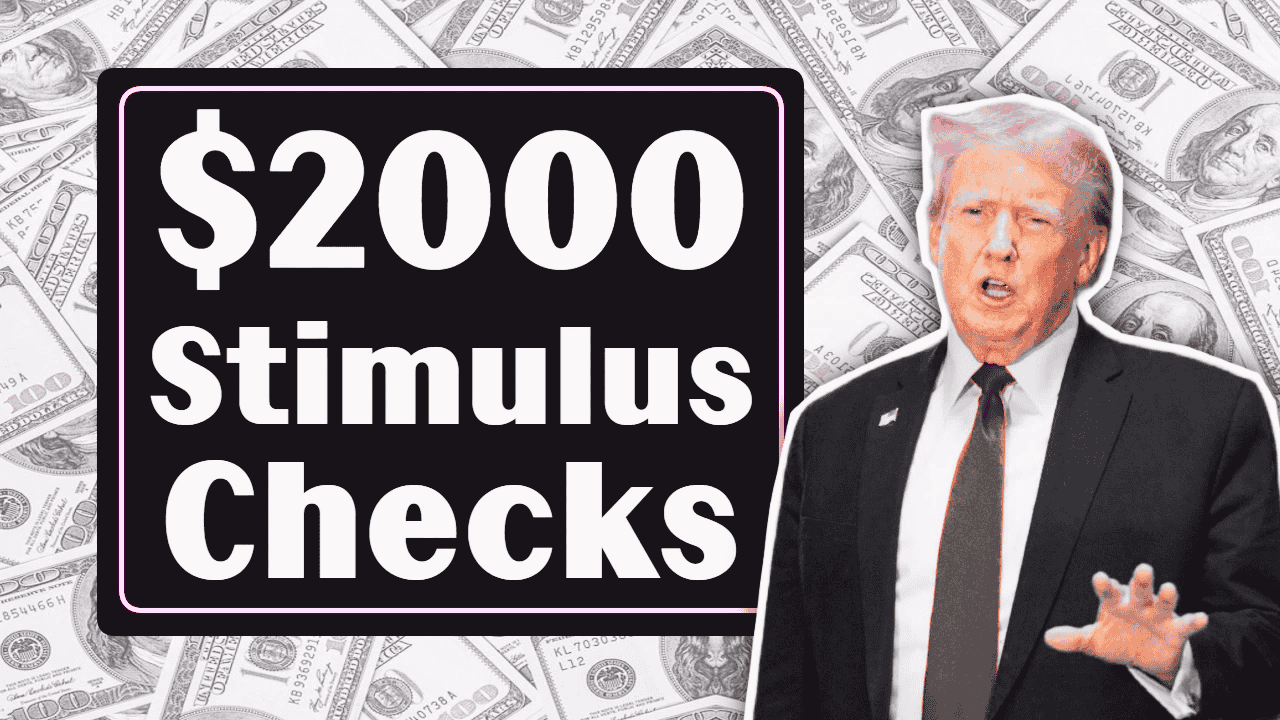
President Trump announced on Sunday that his administration intends to provide $2,000 checks to most Americans. The payments would come from funds raised through expanded tariffs on goods imported from major trading partners, including China, Canada, Mexico, and members of the European Union.
The program would exclude high-income individuals, aiming to redirect the financial benefits of tariffs toward middle- and lower-income families. The president described the move as a direct economic reward for citizens who have supported his “America First” trade strategy.
What the President Said
In a post shared on his Truth Social platform, President Trump emphasized that tariffs play a vital role in maintaining national economic strength and independence. He stated that critics of tariffs “do not understand their importance” and pointed to the nation’s strong economic indicators — low inflation, record-high stock markets, and growing industrial activity — as proof of his policies’ success.

According to Trump, cumulative tariff revenues could reach several trillion dollars, enabling both the funding of these direct payments and partial repayment of the national debt, estimated at over $38 trillion.
The Broader Trade Policy
Since April 2025, the Trump administration has implemented a wide range of tariffs, from 10% to 50%, targeting multiple import categories. These actions, authorized by the International Emergency Economic Powers Act, generated approximately $195 billion in fiscal year 2025 — a 20% increase from the previous year.
Analysts from the Yale Budget Lab forecast that these tariffs might generate up to $2.6 trillion between 2026 and 2035, depending on market conditions and international trade responses.
Legal and Political Challenges
Despite the ambitious scope of the proposal, its future remains uncertain. The U.S. Supreme Court is currently reviewing the president’s authority to expand tariffs under existing law. During recent hearings, justices from both sides of the political spectrum raised concerns about the executive branch’s limits in economic matters.
If the Court rules against the administration, a portion of the expected tariff income could vanish, potentially undermining the plan’s financial base. In a “60 Minutes” interview, President Trump called such a scenario “a very sad day for American families” and mentioned his willingness to pursue other legal pathways to implement the program.
Eligibility and Payment Details
While specific qualification limits have not yet been announced, officials close to the administration suggested that families earning above $150,000–$200,000 annually might be excluded from the payments. Distribution methods — whether through mailed checks or electronic deposits — and the exact rollout timeline remain under discussion.
Given the program’s projected cost of around $600 billion, congressional approval appears likely to be required. Lawmakers could decide to include the measure as part of the existing “Big Beautiful Bill,” a recent tax reform package.
Previous Proposals and Related Efforts
This is not the first time Trump has floated the idea of tariff-funded stimulus checks. In October 2024, he mentioned offering citizens between $1,000 and $2,000 from trade revenues during an interview with One America News. Earlier in 2025, Senator Josh Hawley introduced a similar measure seeking to provide $600 checks, though it did not pass in the Senate.
The new $2,000 plan aligns with a series of recent tax reforms eliminating taxes on tips, overtime pay, and Social Security benefits. Treasury Secretary Scott Bessent described these measures as part of a larger mission to reward working Americans and promote economic fairness.